Match Power Rating with Wire Gauge
This is a crucial safety prerequisite that determines whether the cable can stably handle the required current:
Check the device's nameplate for its rated power, then calculate the required current using the formula: Current = Power ÷ 220V.
Select the appropriate wire cross-section: A 3×1.0mm² cable handles 10A (≤2200W) and is suitable for standard home appliances, computers, etc.
For high-power appliances (e.g., electric water heaters, 3-HP air conditioners), choose a 3×1.5mm² cable to handle 16A (≤3520W); for industrial applications, upgrade to 2.5mm² or larger as needed.
Caution: Do not use thin-gauge wires for high-power devices; overheating can accelerate insulation aging and create a risk of short circuits.
Confirm Physical Connector Specifications
Avoid compatibility issues where the plug won't fit or connect properly:
Standard household use: Typically uses a GB (Chinese Standard) three-pin flat plug; the device-end connector is usually a C13 (often called a "kettle plug"), compatible with most desktop PCs, monitors, and rice cookers.
Server rooms/High-power equipment: Workstations and servers consuming over 2800W require a C19 plug (16A/250V). It is physically incompatible with the standard C13 plug; forced mixing can cause terminal deformation or arcing due to poor contact.
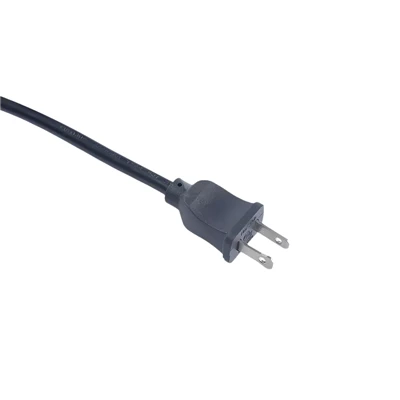
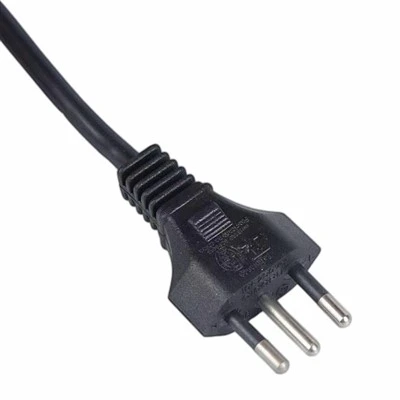
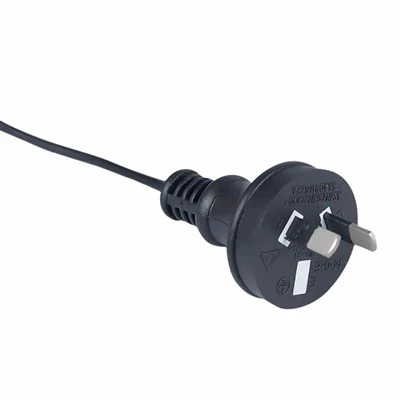
Cross-border use: Ensure compliance with the destination country's certifications (e.g., VDE for the EU, UL for the US). Socket shapes vary significantly by country and are not interchangeable.
Low-power DC devices (routers, cameras, etc.): Prioritize checking the DC connector dimensions-the most common size is 5.5mm × 2.1mm-to ensure the pin diameter matches the port.